BOOKS BY JAMES HANNAM
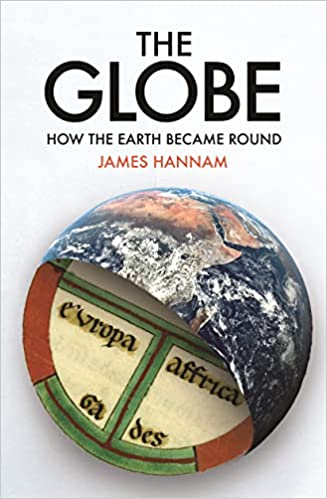
The Globe: How the Earth Became Round
Published by Reaktion Books
“A tour d'horizon that spans time as well as space, this is a thrilling intellectual adventure story” Tom Holland, author of Rubicon, Dominion and Pax
“An exploration of one of humankind's oldest and most profound insights, The Globe is a work of compulsively readable myth-busting. As amiable as it is scholarly, James Hannam's book uses the history of the spherical Earth to provide a global tour of cosmologies through the ages.” Philip Ball
“This splendid book” The Spectator
“Brings to thrilling life centuries of intense debate and disagreement - the fertile ground on which science grows” BBC History Magazine
“As for the arc of his history, it swept me along, especially when I found I was learning a thing or two.” ☆☆☆☆☆ The Daily Telegraph
“James Hannam’s book is truly first class and should become a standard work on the topic” The Renaissance Mathematicus
“A truly all-encompassing book: a wonderful achievement and a delight to read.” Jerry Brotton, author of A History of the World in Twelve Maps
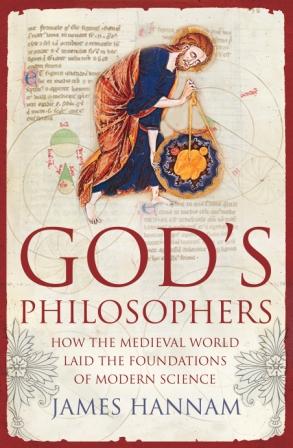
God's Philosophers: How the Medieval World Laid the Foundations of Modern Science
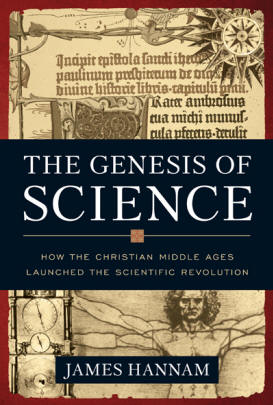
Published in the US as The Genesis of Science: How the Christian Middle Ages Launched the Scientific Revolution
Buy a unique signed copy of God's Philosophers direct from the author for £7.00 (UK) or £9.00 (Europe) including delivery
SHORTLISTED FOR THE ROYAL SOCIETY SCIENCE BOOK PRIZE 2010
SHORTLISTED FOR THE BRITISH SOCIETY FOR THE HISTORY OF SCIENCE DINGLE BOOK PRIZE 2011
US EDITION NOW OUT IN HARDBACK AND KINDLE
UK EDITION NOW OUT IN PAPERBACK AND KINDLE
Also available in DUTCH, GERMAN, ITALIAN and PORTUGUESE
I'm available to give talks on science and religion. See here.
“Here, in short, is a readable book, aimed at an intelligent but ignorant layman. You'll enjoy it.” Daniel Hannan, Daily Telegraph
“...this wonderful book. With an engaging fervour, James Hannam has set about rescuing the reputation of a bunch of half-forgotten thinkers, and he shows how they paved the way for modern science.” Boris Johnson, Mail on Sunday
“Well-researched and hugely enjoyable” New Scientist
“This period has been poorly documented, and I think this makes Hannam's account all the more extraordinary. It is engaging, informative and I heartily recommend it.” Nature
“A fascinating read for anyone interested in the history of science” The Independent
“A spirited jaunt through centuries of scientific development… captures the wonder of the medieval world: its inspirational curiosity and its engaging strangeness.” Sunday Times
“This book contains much valuable material summarised with commendable no-nonsense clarity… James Hannam has done a fine job of knocking down an old caricature.” Noel Malcolm, Sunday Telegraph
“Hannam, the liveliest of guides, makes enjoyable reading out of some seriously dusty history and difficult ideas.” The Scotsman
“A very useful general survey of a difficult topic, and a robust defence of an unfairly maligned age.” The Spectator
 od's Philosophers tells the unknown story of medieval science. It shows how
Copernicus’s sun-centred universe, Kepler’s optics and Galileo’s mechanics all
owed their inspiration and much of their detail to medieval antecedents. You
will meet fascinating characters and hear their stories, including the tragic
love affair of Abelard and Heloise, the burning of the astrologer Cecco D’Ascoli,
the family disasters of Jerome Cardan and the trial of Galileo.
God's Philosophers
debunks many myths about the Middle Ages. Medieval people did not think
the earth was flat, nor did Columbus 'prove' that it is a sphere. Everyone
already knew. The Inquisition burnt nobody for their scientific ideas, nor was Copernicus
afraid of persecution. No Pope tried to ban human dissection or the number zero.
Medieval thinkers were not uncritical slaves to Aristotle. The Middle Ages were
an era of invention and rapid technological change. For example,
spectacles, the mechanical clock and the windmill were all invented in
thirteenth century Europe. Ideas from the Far East, like printing, gunpowder and
the compass were taken further by Europeans than the Chinese had imagined
possible. Historians now utterly reject the idea that science and religion have
been locked in a great conflict throughout history.
God's Philosophers
shows how the Church supported but also set boundaries for science in the Middle
Ages. Many of the most significant contributors to medieval science became
bishops or cardinals. Many people today still believe that heavy objects
fall faster than light ones and that vacuums suck. In
God's Philosophers, you will not only learn the truth about physics, but also how
medieval scholars overturned the false wisdom of ancient Greece to lay the
foundations of modern science.
od's Philosophers tells the unknown story of medieval science. It shows how
Copernicus’s sun-centred universe, Kepler’s optics and Galileo’s mechanics all
owed their inspiration and much of their detail to medieval antecedents. You
will meet fascinating characters and hear their stories, including the tragic
love affair of Abelard and Heloise, the burning of the astrologer Cecco D’Ascoli,
the family disasters of Jerome Cardan and the trial of Galileo.
God's Philosophers
debunks many myths about the Middle Ages. Medieval people did not think
the earth was flat, nor did Columbus 'prove' that it is a sphere. Everyone
already knew. The Inquisition burnt nobody for their scientific ideas, nor was Copernicus
afraid of persecution. No Pope tried to ban human dissection or the number zero.
Medieval thinkers were not uncritical slaves to Aristotle. The Middle Ages were
an era of invention and rapid technological change. For example,
spectacles, the mechanical clock and the windmill were all invented in
thirteenth century Europe. Ideas from the Far East, like printing, gunpowder and
the compass were taken further by Europeans than the Chinese had imagined
possible. Historians now utterly reject the idea that science and religion have
been locked in a great conflict throughout history.
God's Philosophers
shows how the Church supported but also set boundaries for science in the Middle
Ages. Many of the most significant contributors to medieval science became
bishops or cardinals. Many people today still believe that heavy objects
fall faster than light ones and that vacuums suck. In
God's Philosophers, you will not only learn the truth about physics, but also how
medieval scholars overturned the false wisdom of ancient Greece to lay the
foundations of modern science.
The Genesis of Science is written by a historian with degrees in physics and history from Oxford and London universities. The author also has a PhD in the history of science from the University of Cambridge. It is based on the author’s own research as well as highly regarded academic work by the world’s leading historians of medieval science such as David Lindberg, Edward Grant, William A Wallace, Alan Debus, John North, Lynn Thorndike, Anneliese Maier and Lynn White. This is the first history of medieval science intended for the lay reader and makes available the exciting developments in modern scholarship.
My most sincere thanks to Gode Cookery for the wonderful woodcuts that illustrate this web site.
© James Hannam 2023